
After 1965, when American involvement in Vietnam expanded and men throughout the country were drafted overseas, what was the reaction to the draft on the home front?
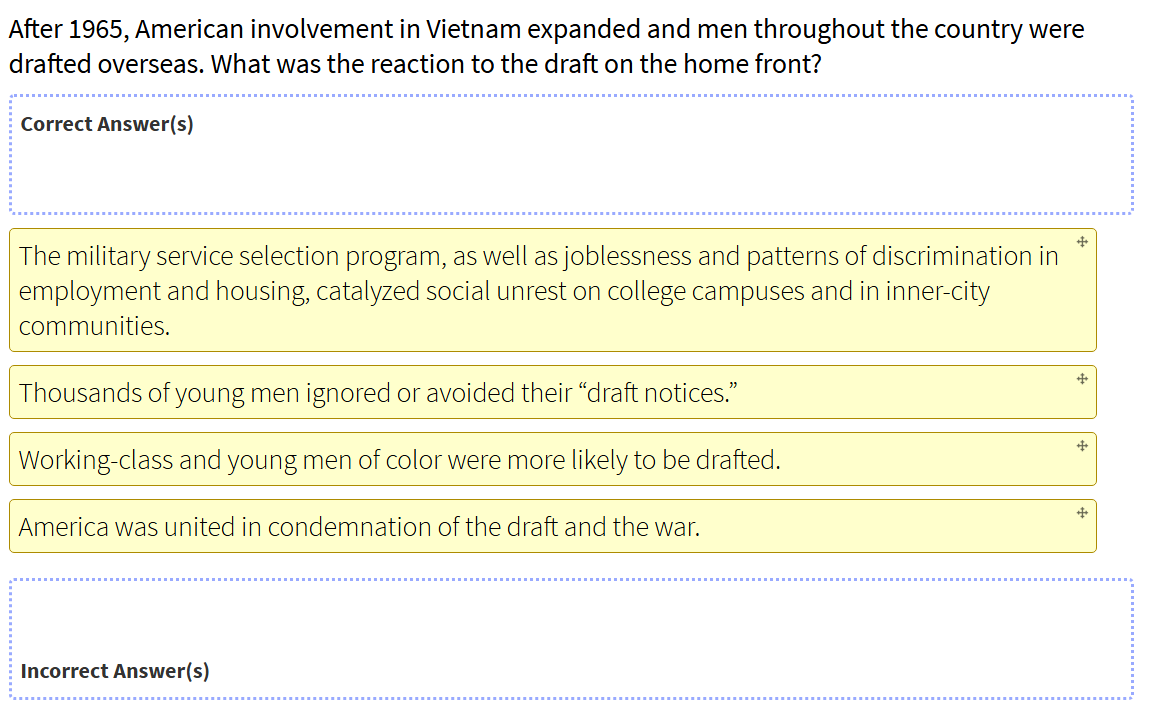
After 1965, the draft sparked widespread backlash at home, especially among young people and college students. Many protested, organized antiwar marches, resisted induction (including draft dodging and fleeing to Canada), and publicly burned draft cards. The draft became a major driver of the broader anti-Vietnam War movement and deepened divisions in American society.
What this question is really asking
You are being asked to describe how Americans reacted inside the United States when the government expanded conscription for the Vietnam War after 1965. The key is to focus on home-front responses to the draft, not battlefield events.
Why the draft triggered such strong reactions
The draft made the war personal for millions of families because it directly determined who could be sent to fight. As troop levels rose, so did the number of young men at risk of being called up.
Main home-front reactions to the draft
- Mass protest and organizing: Students and antiwar groups held rallies, teach-ins, and large marches arguing the draft was unfair and the war was wrong.
- Draft resistance: Some men refused induction, skipped draft board appointments, or sought deferments. Others became conscientious objectors.
- Public acts of defiance: A famous form of protest was burning draft cards, which became a symbol of resistance.
- Leaving the country: Some draft resisters fled, most famously to Canada, to avoid being drafted.
The big historical takeaway
Opposition to the draft helped fuel the wider antiwar movement and increased social and political conflict in the United States, since many Americans supported the war while others saw the draft as unjust or immoral.

- How Soldiers Felt About the Trail of Tears Removal
- Restriction on Free African Americans: Voting Bans
- Why Was Jamestown Founded? Economic Reasons Explained
- SNCC Directional Change Event (Stokely Carmichael)
- Marbury v. Madison: 1803 Judicial Review Case
- Wesseling Textile Imports: Which Global Context Aspect?
- Effects of the Agricultural Revolution: Correct Order
- 5th vs 14th Amendment: Federal or State Government?
Comments (0)
Please to leave a comment.