
Which of these was Germany permitted to keep under the terms of the Treaty of Versailles: a standing army, new military weapons, monetary reparations to cities, or rights to all territories?
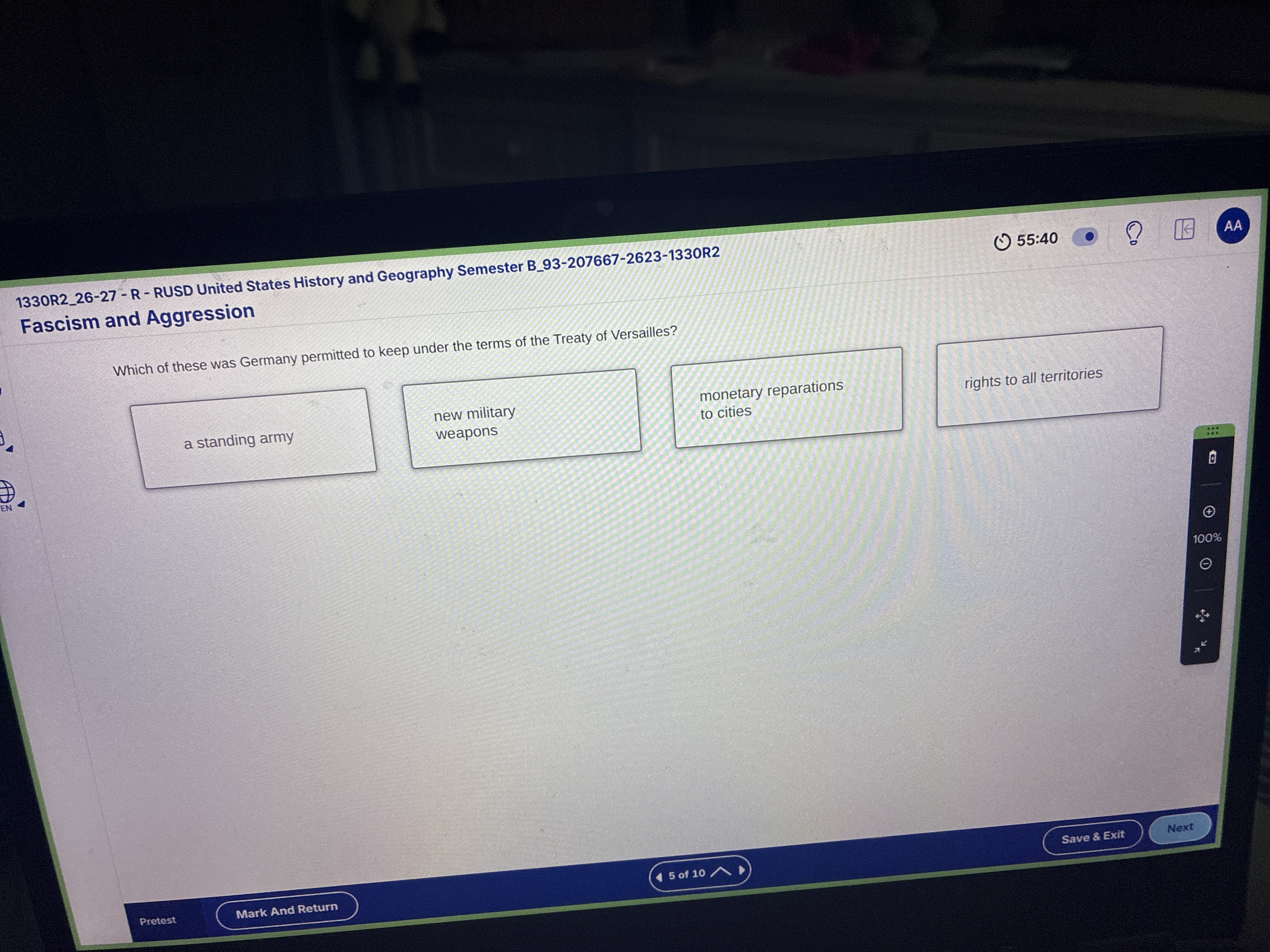
Germany was permitted to keep a standing army, but it was strictly limited (to 100,000 volunteers) and could not include conscription or many modern weapons. The other options are incorrect because the treaty restricted new weapons, took away territories, and required Germany to pay reparations rather than receive them.
What the question is really testing
This is asking what the Treaty of Versailles (1919) allowed Germany to have after World War I. The treaty reduced Germany’s military power and territory, so the correct choice will be something allowed in a limited form.
Checking each option against the treaty
- A standing army: Allowed, but capped at $100{,}000$ soldiers and no conscription.
- New military weapons: Not allowed, Germany was restricted from having or developing many modern weapons (for example tanks and military aircraft).
- Monetary reparations to cities: Wrong direction. Germany had to pay reparations to the Allies.
- Rights to all territories: Not allowed, Germany lost territory (for example Alsace-Lorraine returned to France).
Correct choice
A standing army is the only option Germany was permitted to keep, even though it was tightly limited.

- Armenian Genocide Statements: Which Are Accurate?
- Why Was Jamestown Founded? Economic Reasons Explained
- SNCC Directional Change Event (Stokely Carmichael)
- Marbury v. Madison: 1803 Judicial Review Case
- Wesseling Textile Imports: Which Global Context Aspect?
- Effects of the Agricultural Revolution: Correct Order
- 5th vs 14th Amendment: Federal or State Government?
- Aegean Sea: Central to Greek Life and Trade
Comments (0)
Please to leave a comment.